Flying Wing
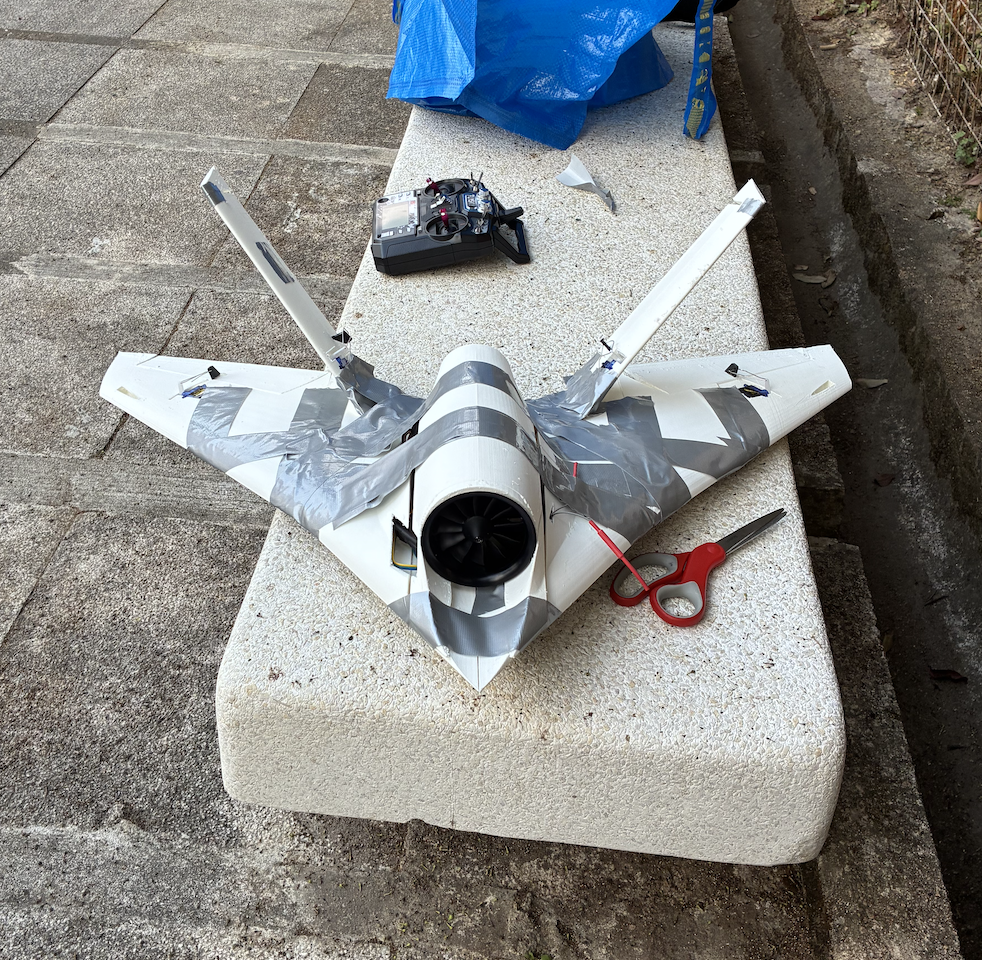
Speedbuild completed over Christmas, optimized for 30km/h+ flight.
48%
Mass reduction (structural optimization)
1.3
Thrust-to-weight ratio
78%
ESC thermal warpage reduction


Further details
Preliminary Design
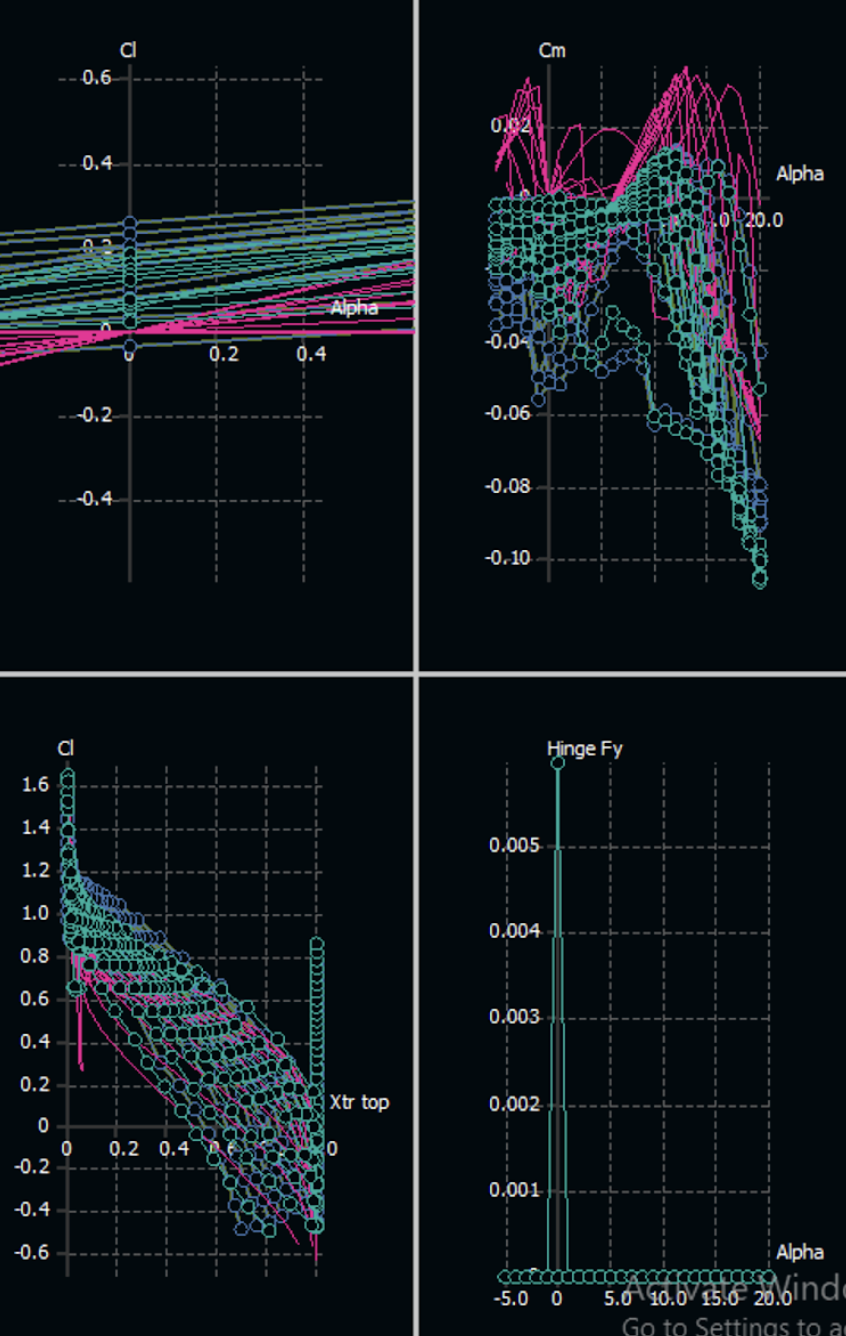
Fully 3D-printed 1 kg flying-wing UAV with geometry optimized for efficient cruising at 30+ km/h. Performed batch Reynolds number sweeps in XFLR5 for various flying wing airfoils across Re = 2,000–3,000,000.
A MH60 root airfoil with PW51 wingtips was chosen based on resulting data, with 3° of wingtip washout incorporated to reduce tip stall risk and improve dynamic stability across the 90 cm wingspan.
CAD & Manufacturing
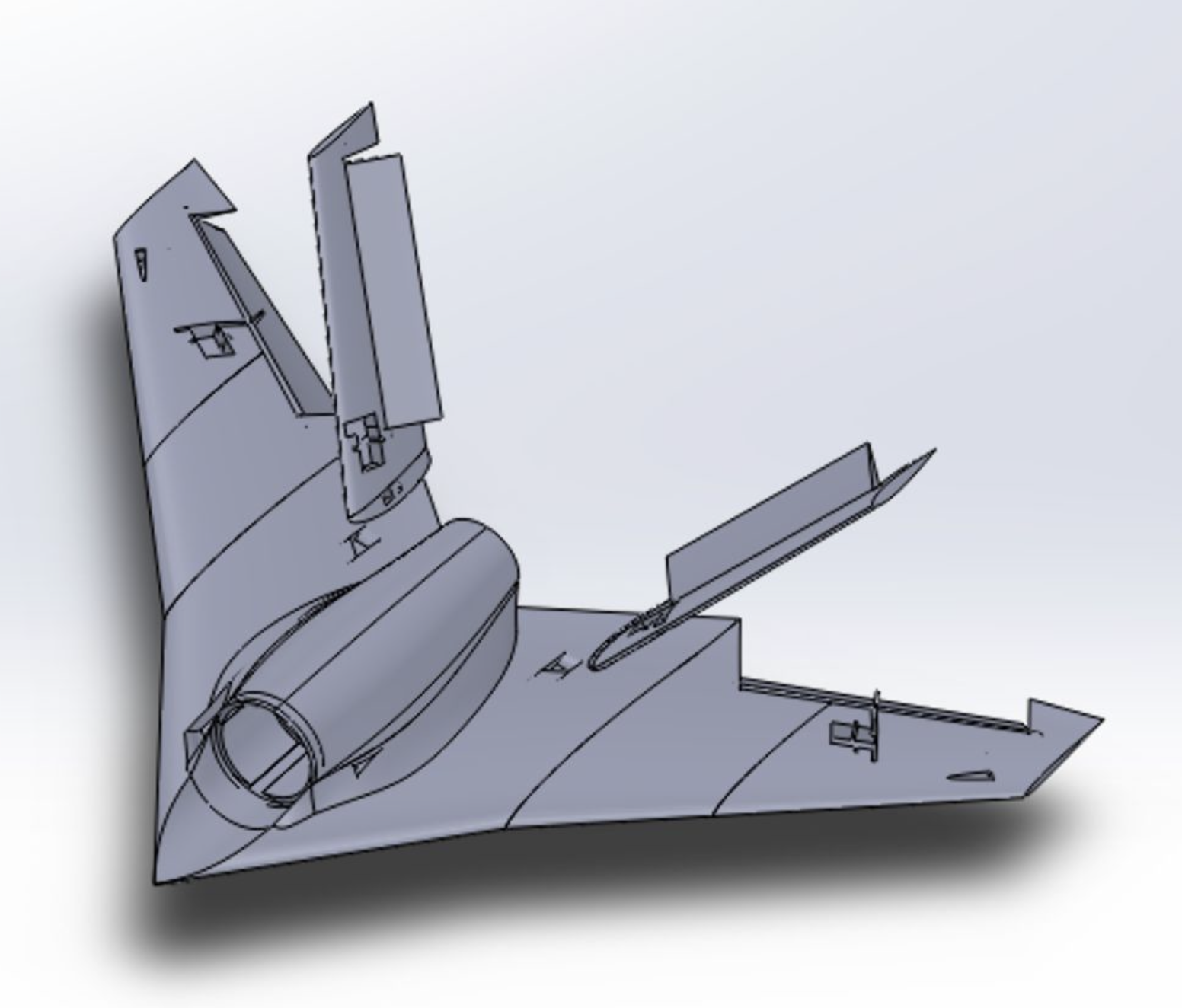
Designed the full airframe and internal layout in SolidWorks, including modular avionics mounting, serviceable wiring routes, and a ram-air duct for ESC cooling. LW-PLA was used for structural components with targeted PETG reinforcement near thermally sensitive areas.
20mm diameter carbon fiber tubes string all 3D-printed sections together for structural integrity. Extensive print trials characterized filament shrinkage to maintain tight tolerances.
Aerodynamic & Structural Analysis
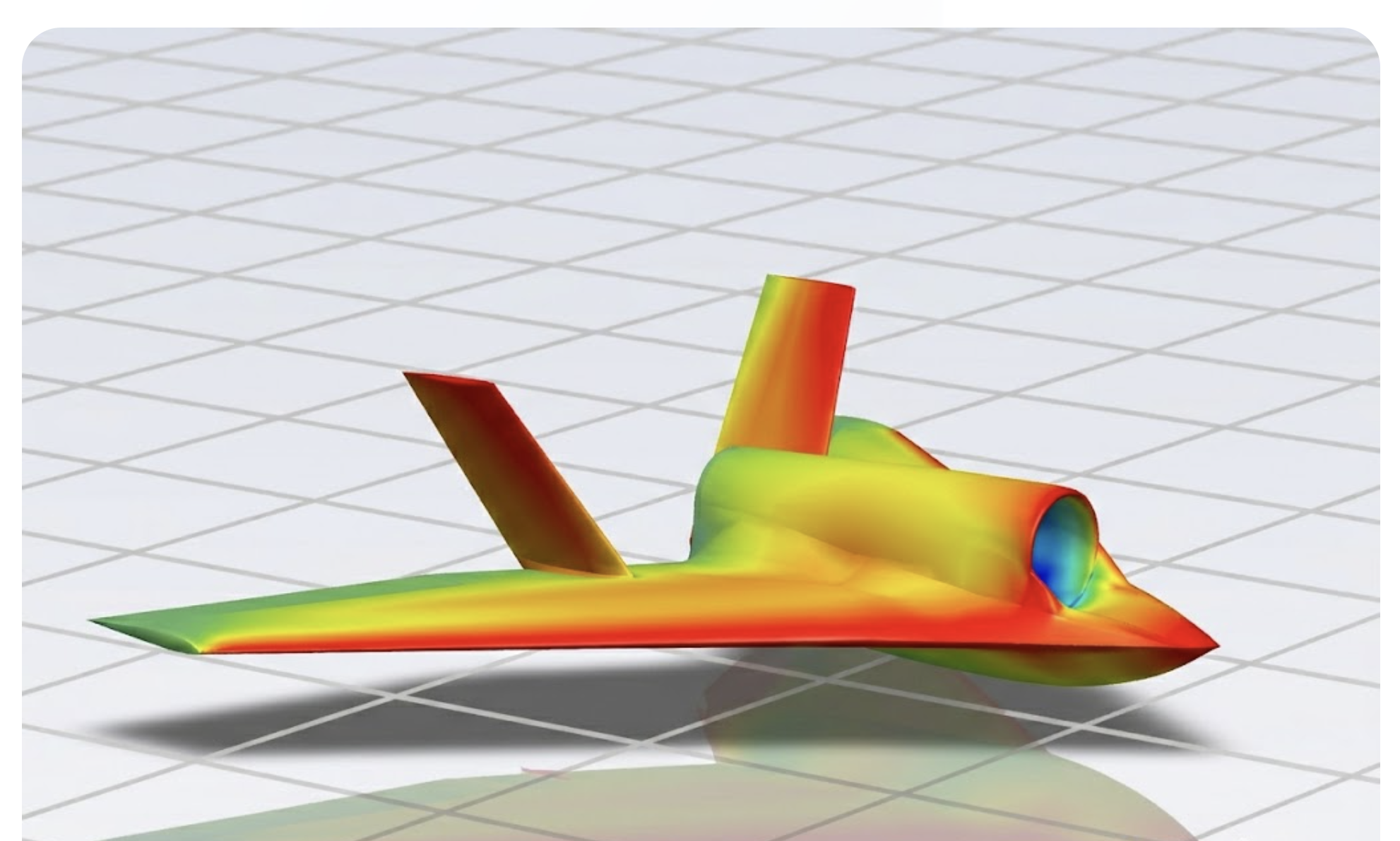
Conducted aerodynamic stability analysis in XFLR5, tuning washout, sweep, and dihedral to achieve strong modal behavior (short-period ζ = 0.372, phugoid ζ = 0.231). ANSYS was used for drag studies and structural validation.
Structural optimization using LW-PLA reduced overall mass by 48%, while PETG reinforcement reduced ESC thermal warping by 78%.
Fixed-Wing Long-Range (V2)
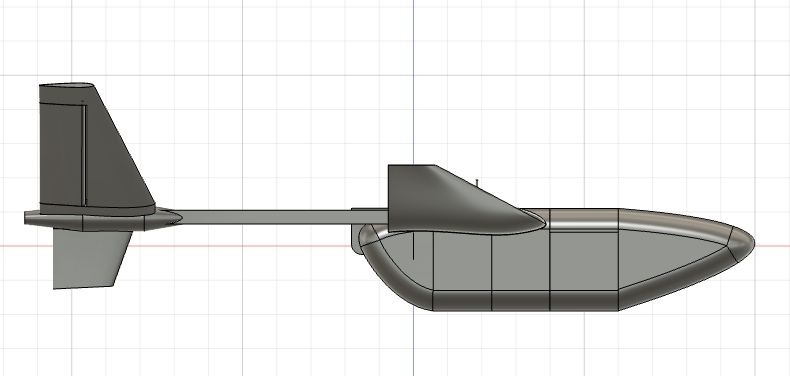
3D-printed / lasercut wood hybrid drone optimized for long-range performance while having a wingspan under 1.5m.
2 kg
Weight
1.4 m
Wingspan
0.65
Thrust-to-weight ratio


Further details
Preliminary Design
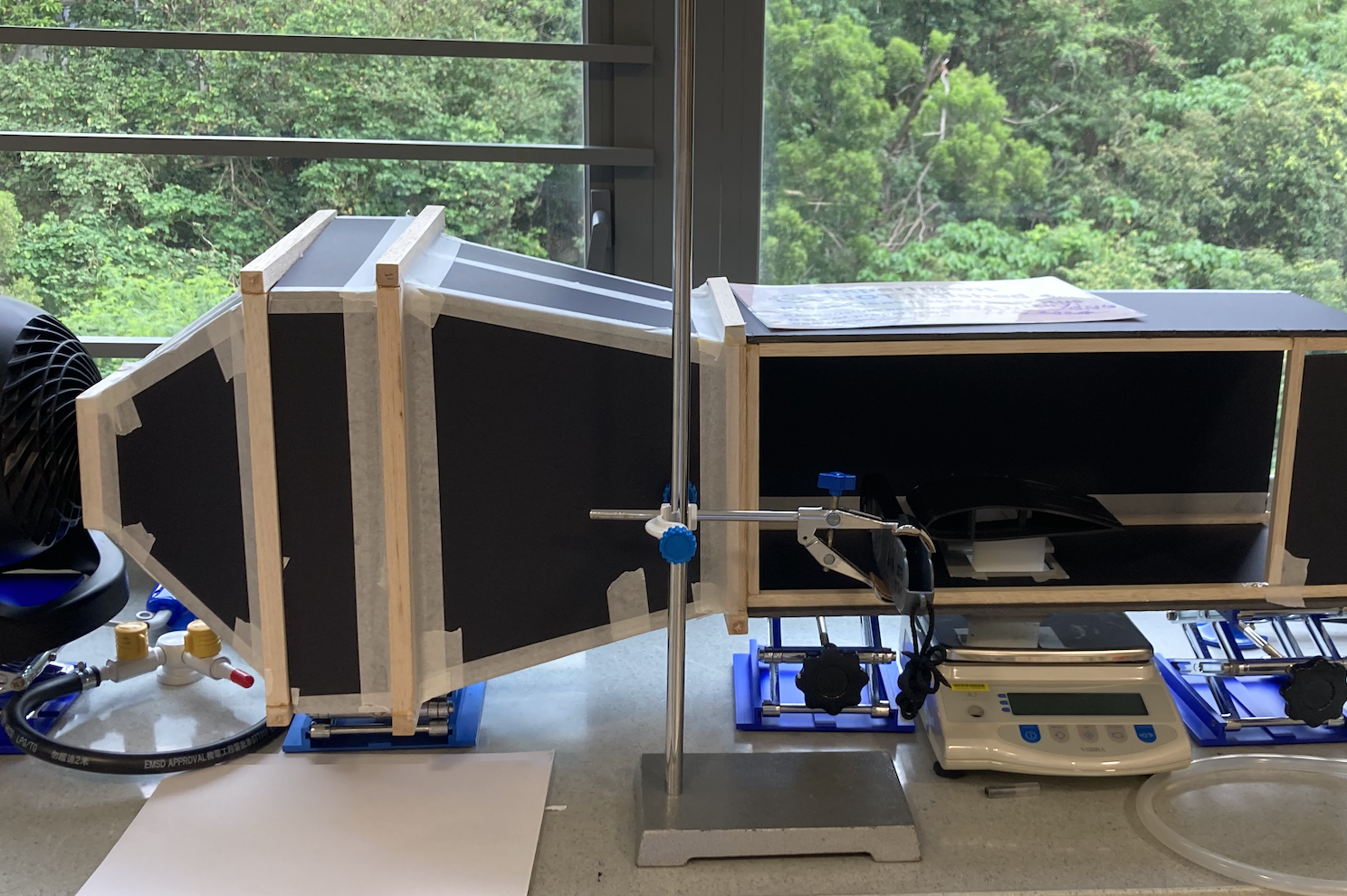
Designed as a long-endurance fixed-wing V-tail platform using conventional RC design principles. Without access to CFD tools at the time, a small laminar-flow wind tunnel was built to collect comparative airfoil data and generate basic polars for lift versus angle of attack.
CAD & Build
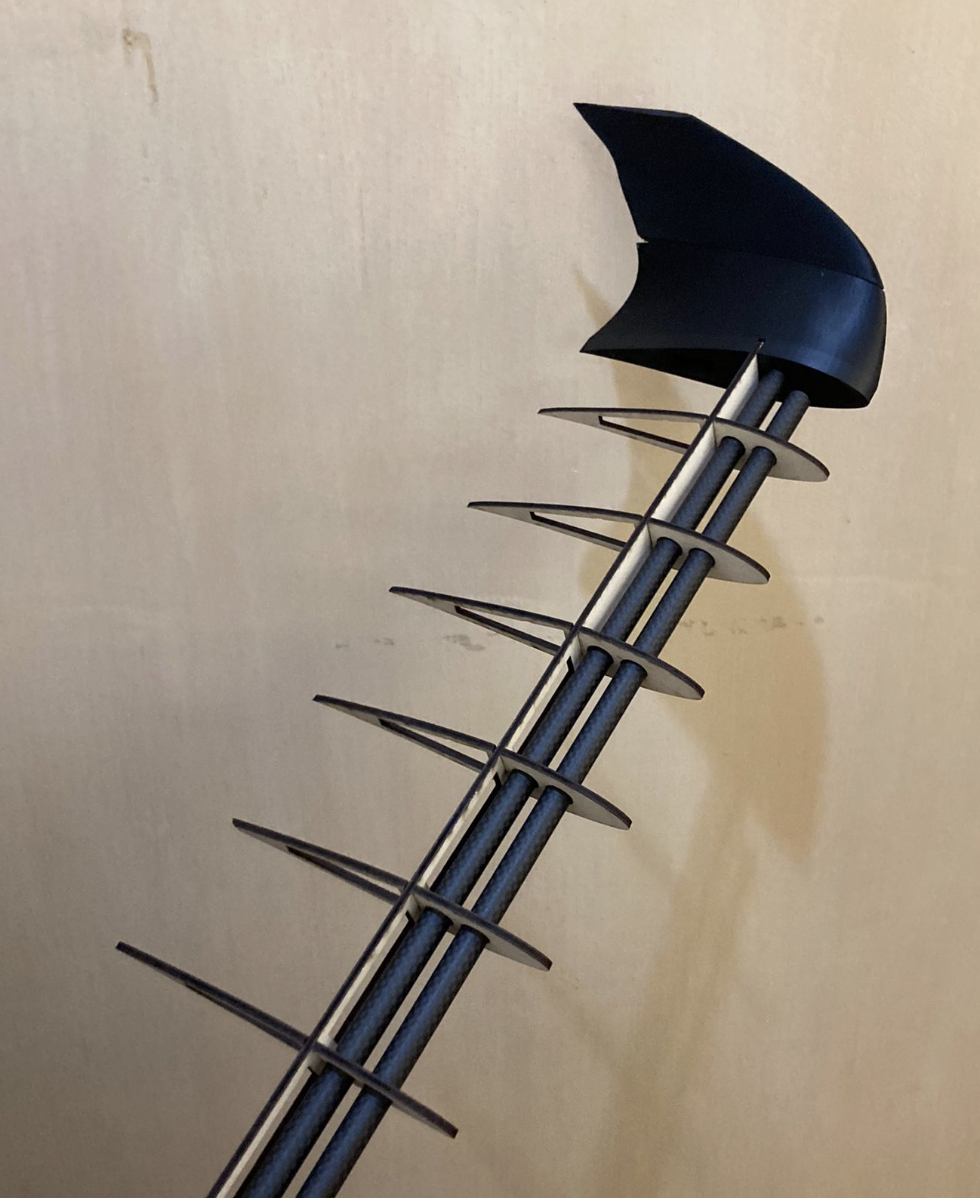
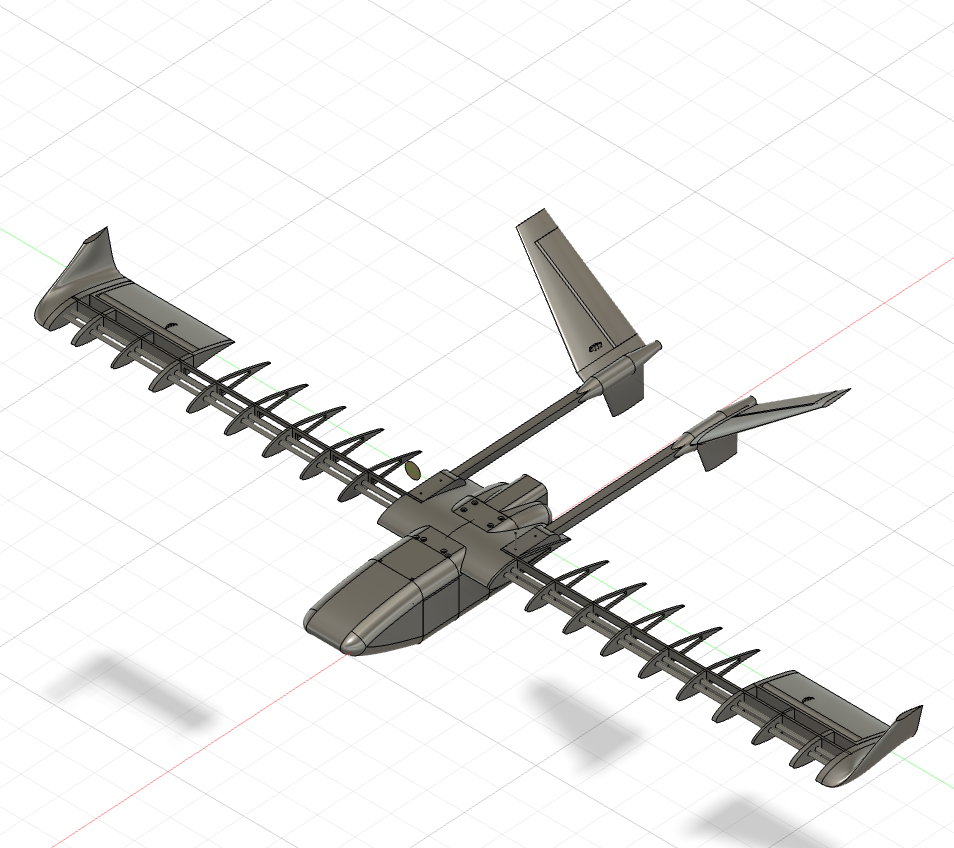
Modeled structural layout and avionics integration using laser-cut balsa ribs, carbon-fiber spars, and selective 3D-printed components. Platform included onboard FPV, low-resolution infrared sensing for urban heat mapping, and distributed flight-control logic using Arduino devices in a master–slave architecture.
Fixed-Wing Long-Range (V1)
Fully hand-carved drone — the first one built.
1.9 kg
Weight
1.5 m
Wingspan
0.68
Thrust-to-weight ratio
Further details
Preliminary Design
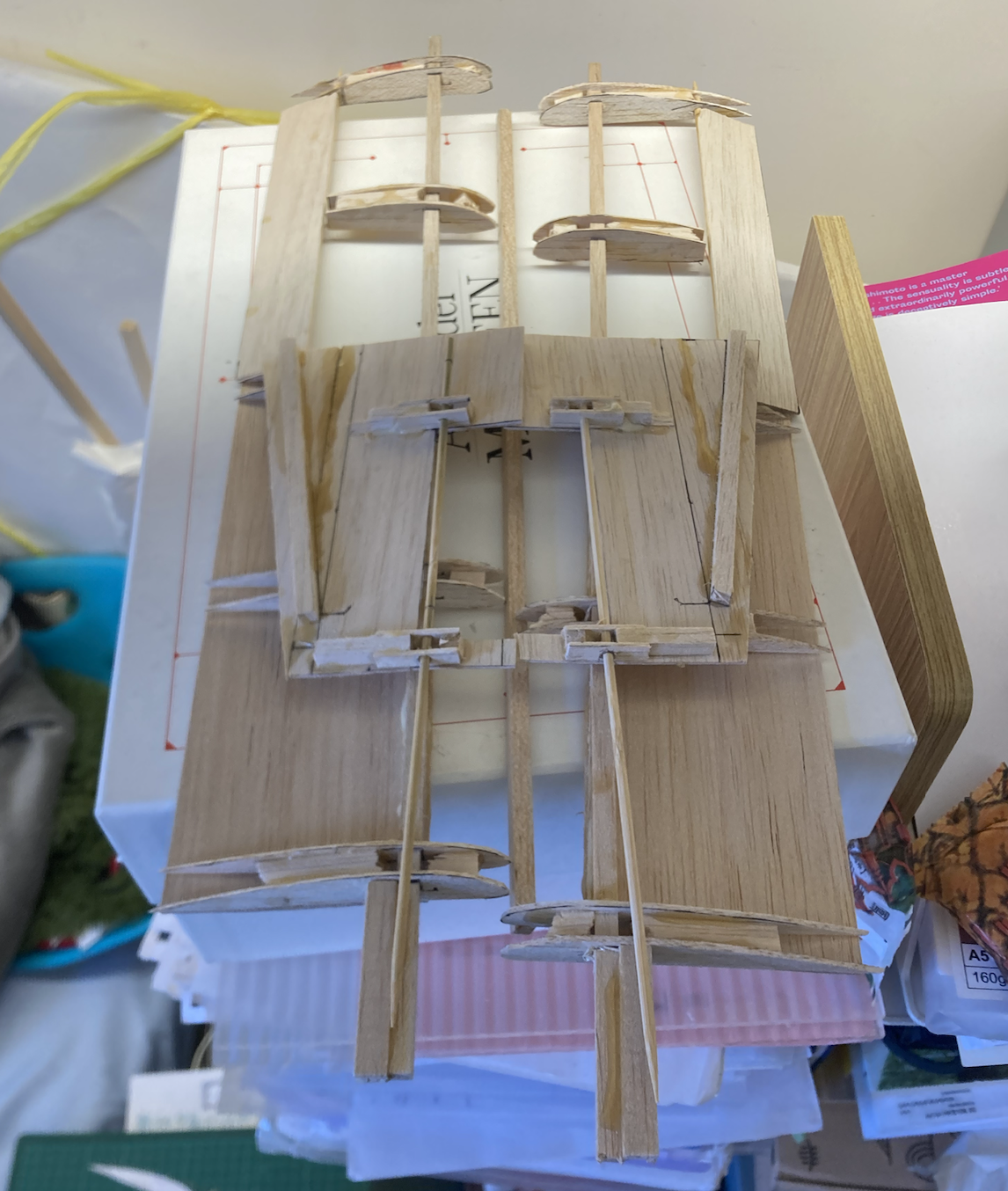
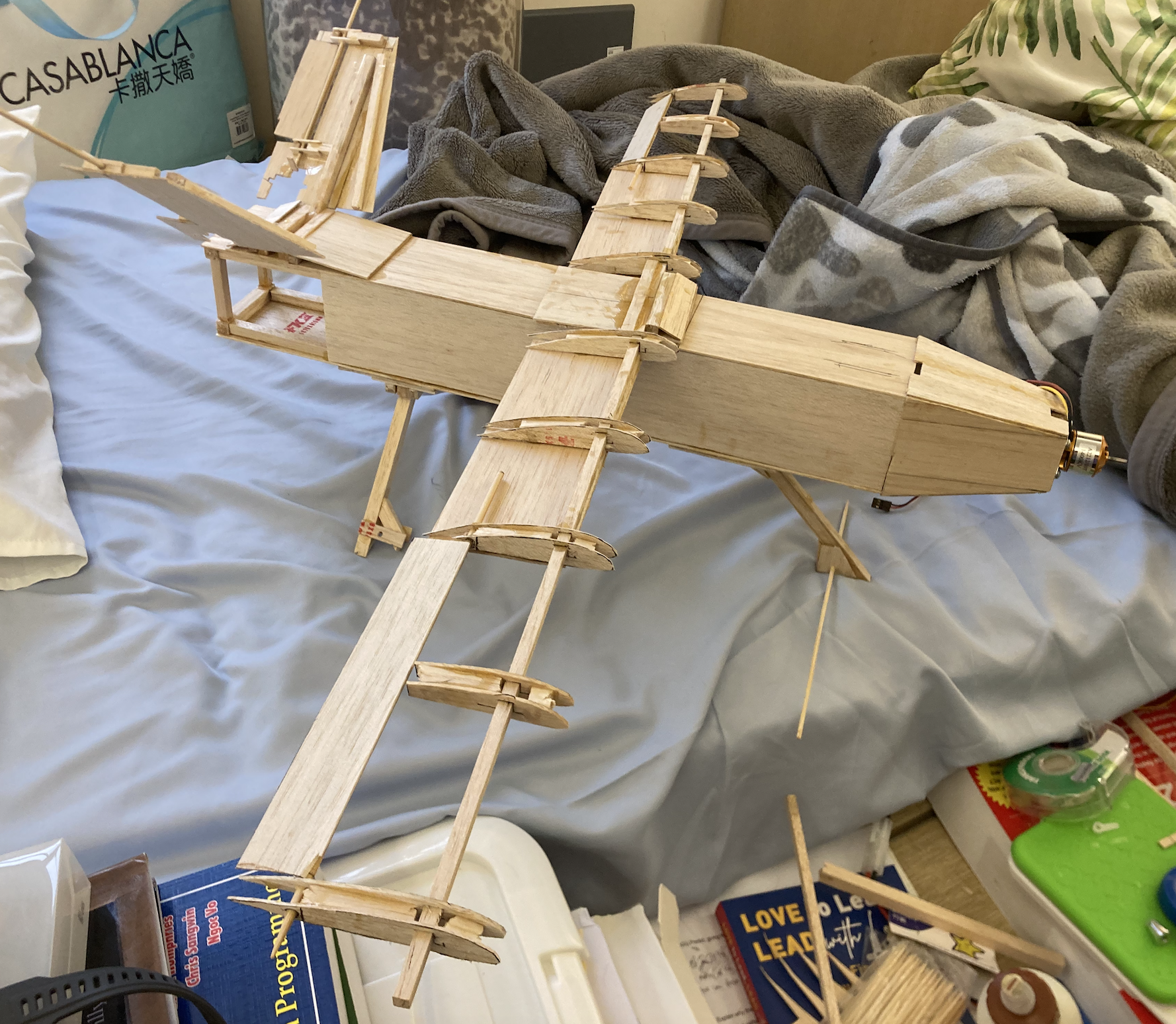
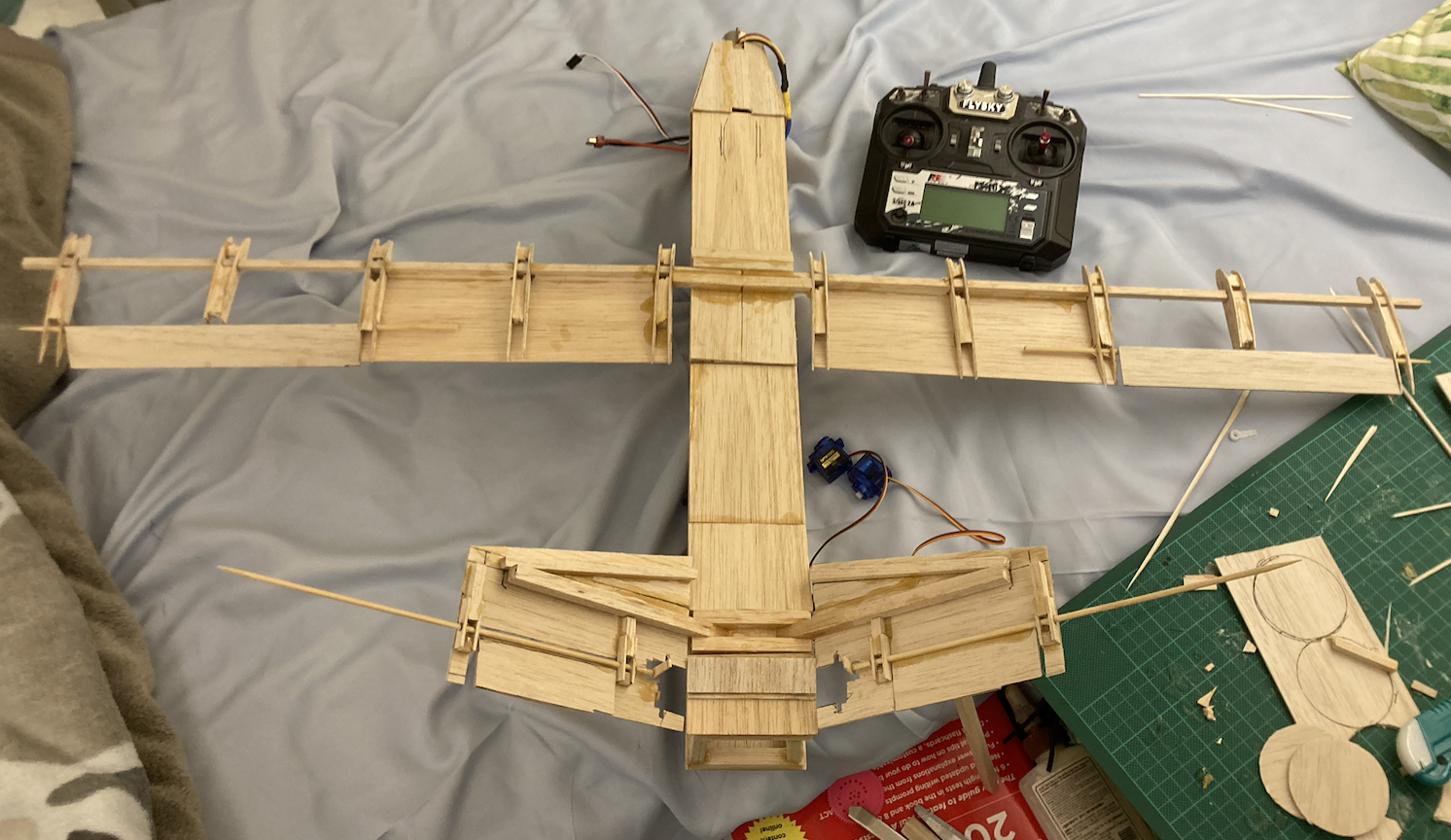
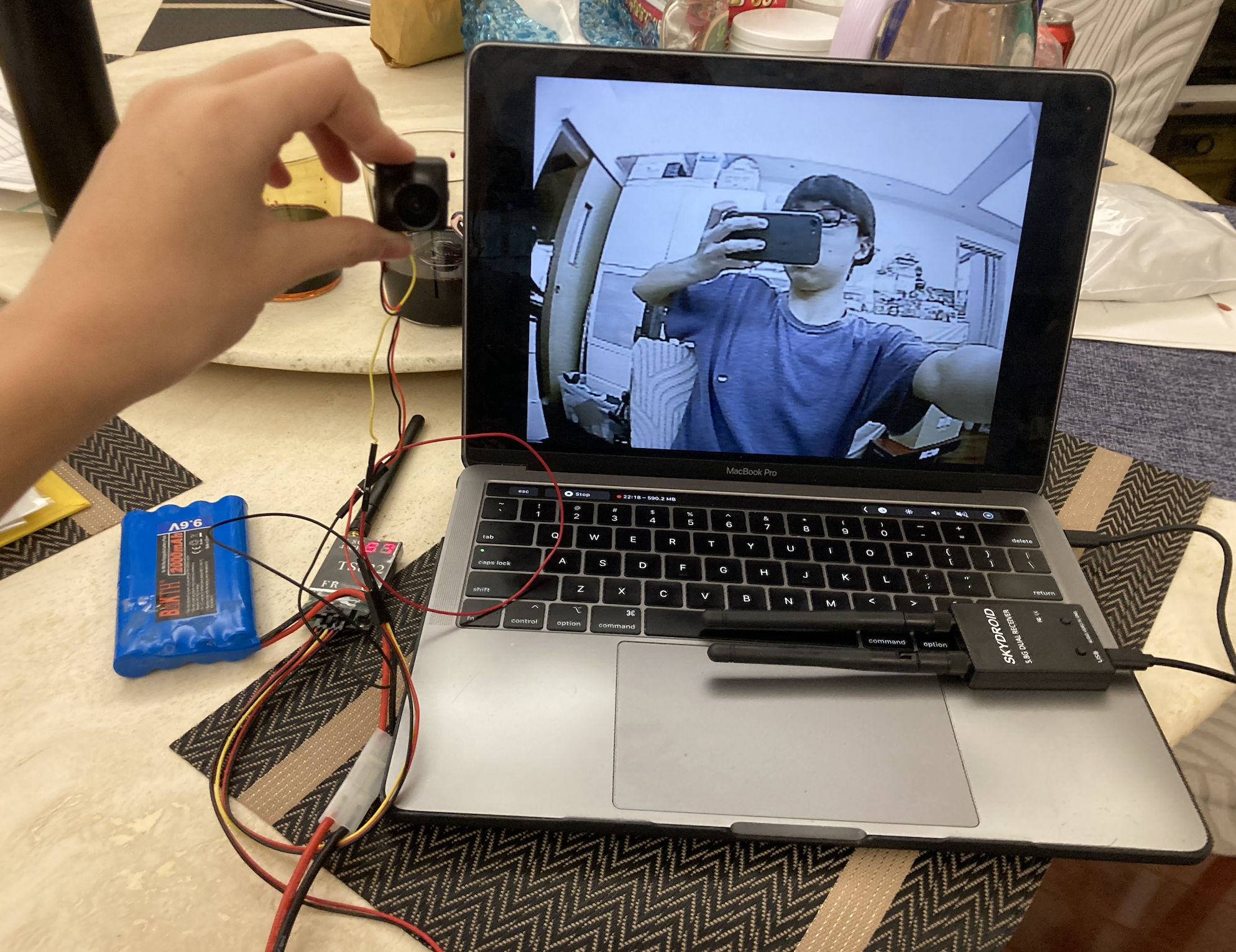
First complete fixed-wing UAV built entirely from balsa wood before access to a 3D printer. Designed using standard RC aircraft heuristics for stability, control authority, and endurance. Configured for FPV flight using a lightweight analog camera system and long-range radio transmission.
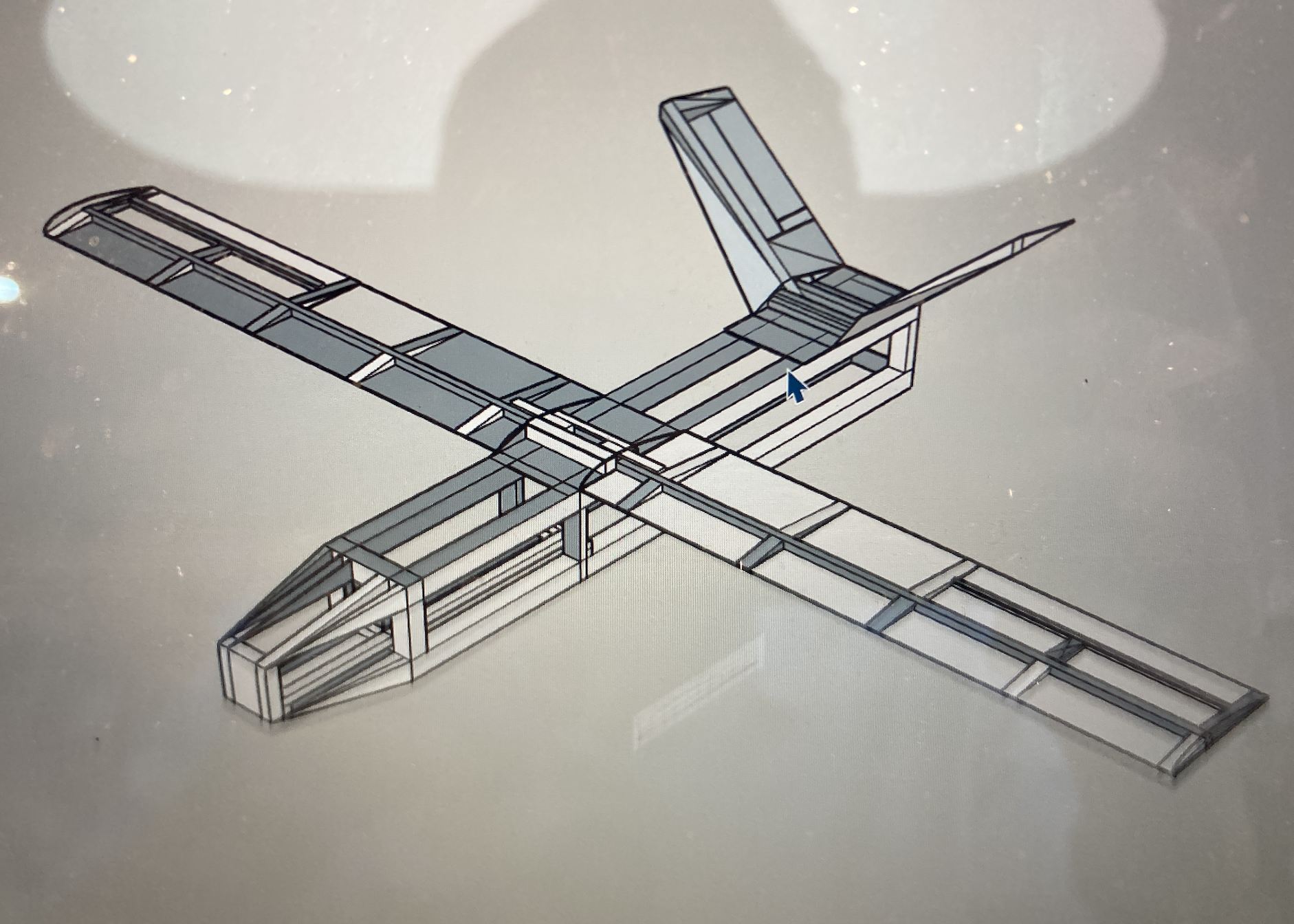
CAD & Electronics
Basic CAD used primarily for visualization and dimensional planning rather than full structural optimization. Electronics focused on achieving reliable video transmission. A 512 MHz radio system was selected due to operation in dense urban Hong Kong, where signal obstruction and multipath interference were significant constraints.